
Industrial Machinery & Manufacturing
How to choose a cnc machining factory you can trust?
The primary indicator for evaluating CNC machining manufacturers is the stability of their equipment precision. The positioning accuracy of five-axis machine tools from high-quality suppliers should reach ±0.003 millimeters, and the repeat positioning accuracy should be ±0.001 millimeters. Take Jabp Green Point, a supplier in Apple's supply chain, as an example. Its workshop constant temperature control system keeps the temperature fluctuation within ±0.5°C and the humidity within 45%±5%, ensuring that the processing tolerance of aviation-grade aluminum alloy components remains within 0.01 millimeters continuously. Such factories usually hold ISO 9001 quality system certification and have AS9100 aerospace certification. The pass rate of the first inspection of products exceeds 98.5%.
The precision inspection capability is directly related to the reliability of quality. A trustworthy factory should be equipped with a three-coordinate measuring machine, with a measurement accuracy of 1.9+3L/1000 microns. The customer audit report of TRUMPF, a German company, shows that its measurement laboratory conducts 3,200 equipment calibrations annually, and the laser interferometer conducts full-stroke positioning accuracy tests on machine tools every six months to ensure that the accuracy attenuation does not exceed 0.002 millimeters within 24 months. Such manufacturers conduct 100% spectral analysis on incoming material batches, reducing the risk of material misuse to less than 0.01%.
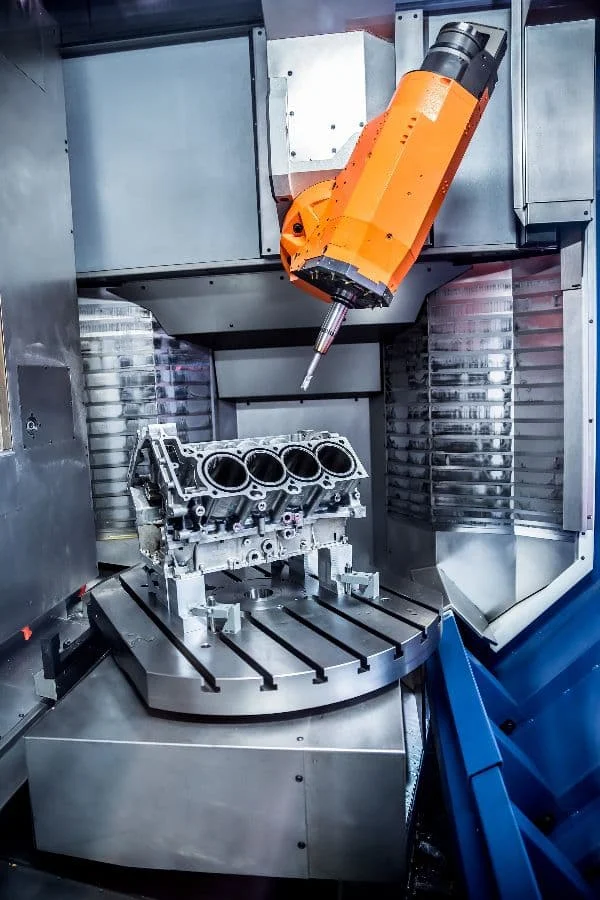 Supply chain transparency builds the foundation of trust, and outstanding manufacturers will provide real-time production kanban systems. Tesla's secondary supplier, Weichuang International, updates the production progress every four hours through the MES system. Customers can check the yield rate data of each process at any time. For instance, the real-time yield rate of the milling process is maintained at 99.2%, and the color difference ΔE value of anodizing is controlled within 0.8. This data visualization enables customers to accurately predict delivery cycles, reducing the risk of delay from the industry average of 15% to 3%.
The professionalism of the technical team affects the efficiency of problem-solving. In top factories, the proportion of engineers with senior professional titles should exceed 30%. Data from Procter & Gamble Machinery, a leading enterprise in the aerospace industry, shows that its technical team has an average of 8.5 years of working experience and receives 240 hours of professional technical training each year. They can provide a 76-page process plan for the processing of INCONEL 718 superalloy, extending the tool life from the conventional 45 minutes to 110 minutes.
The after-sales service system reflects the value of long-term cooperation. A reliable CNC processing factory should provide full life cycle management. Medical equipment contract manufacturer Jialantu promises to respond to customer inquiries within 30 minutes, arrive on site within 48 hours to handle abnormalities, and provide four free preventive maintenance services for equipment each year. Its customer database shows that the renewal rate of customers who have cooperated for more than five years is 92%, and it helps customers optimize processing costs by an average of 18% each year.
When choosing a cnc machining factory, it is also necessary to examine the adaptability to innovation. For instance, BYD Electronics has invested 12% of its annual revenue in R&D and developed a rapid line changing system for 3C products, reducing the product conversion time from 120 minutes to 15 minutes. According to a third-party assessment report, suppliers with the qualification of intelligent manufacturing demonstration factories have their new product introduction cycle shortened by 40% compared to industry standards, and the range of quality fluctuations in batch production has narrowed by 63%.
Supply chain transparency builds the foundation of trust, and outstanding manufacturers will provide real-time production kanban systems. Tesla's secondary supplier, Weichuang International, updates the production progress every four hours through the MES system. Customers can check the yield rate data of each process at any time. For instance, the real-time yield rate of the milling process is maintained at 99.2%, and the color difference ΔE value of anodizing is controlled within 0.8. This data visualization enables customers to accurately predict delivery cycles, reducing the risk of delay from the industry average of 15% to 3%.
The professionalism of the technical team affects the efficiency of problem-solving. In top factories, the proportion of engineers with senior professional titles should exceed 30%. Data from Procter & Gamble Machinery, a leading enterprise in the aerospace industry, shows that its technical team has an average of 8.5 years of working experience and receives 240 hours of professional technical training each year. They can provide a 76-page process plan for the processing of INCONEL 718 superalloy, extending the tool life from the conventional 45 minutes to 110 minutes.
The after-sales service system reflects the value of long-term cooperation. A reliable CNC processing factory should provide full life cycle management. Medical equipment contract manufacturer Jialantu promises to respond to customer inquiries within 30 minutes, arrive on site within 48 hours to handle abnormalities, and provide four free preventive maintenance services for equipment each year. Its customer database shows that the renewal rate of customers who have cooperated for more than five years is 92%, and it helps customers optimize processing costs by an average of 18% each year.
When choosing a cnc machining factory, it is also necessary to examine the adaptability to innovation. For instance, BYD Electronics has invested 12% of its annual revenue in R&D and developed a rapid line changing system for 3C products, reducing the product conversion time from 120 minutes to 15 minutes. According to a third-party assessment report, suppliers with the qualification of intelligent manufacturing demonstration factories have their new product introduction cycle shortened by 40% compared to industry standards, and the range of quality fluctuations in batch production has narrowed by 63%.
Supply chain transparency builds the foundation of trust, and outstanding manufacturers will provide real-time production kanban systems. Tesla's secondary supplier, Weichuang International, updates the production progress every four hours through the MES system. Customers can check the yield rate data of each process at any time. For instance, the real-time yield rate of the milling process is maintained at 99.2%, and the color difference ΔE value of anodizing is controlled within 0.8. This data visualization enables customers to accurately predict delivery cycles, reducing the risk of delay from the industry average of 15% to 3%.
The professionalism of the technical team affects the efficiency of problem-solving. In top factories, the proportion of engineers with senior professional titles should exceed 30%. Data from Procter & Gamble Machinery, a leading enterprise in the aerospace industry, shows that its technical team has an average of 8.5 years of working experience and receives 240 hours of professional technical training each year. They can provide a 76-page process plan for the processing of INCONEL 718 superalloy, extending the tool life from the conventional 45 minutes to 110 minutes.
The after-sales service system reflects the value of long-term cooperation. A reliable CNC processing factory should provide full life cycle management. Medical equipment contract manufacturer Jialantu promises to respond to customer inquiries within 30 minutes, arrive on site within 48 hours to handle abnormalities, and provide four free preventive maintenance services for equipment each year. Its customer database shows that the renewal rate of customers who have cooperated for more than five years is 92%, and it helps customers optimize processing costs by an average of 18% each year.
When choosing a cnc machining factory, it is also necessary to examine the adaptability to innovation. For instance, BYD Electronics has invested 12% of its annual revenue in R&D and developed a rapid line changing system for 3C products, reducing the product conversion time from 120 minutes to 15 minutes. According to a third-party assessment report, suppliers with the qualification of intelligent manufacturing demonstration factories have their new product introduction cycle shortened by 40% compared to industry standards, and the range of quality fluctuations in batch production has narrowed by 63%.
Discipline at the table begins long before the bottle is opened — it begins in the cellar, with restraint.— Ava Devine, Master Sommelier & Founder