
Industrial Machinery & Manufacturing
Looking for a Reliable Vertical Machining Center for Mass Production?
In a large-scale production environment, the value of a reliable vertical machining center lies in its astonishing stability. Industry standards require that its average mean time between failures exceeds 2,000 hours. For instance, statistics from Bosch, an automotive parts manufacturer, at its global factories show that after adopting high-performance vertical machining centers, the availability rate of production lines has increased from 92% to 98.5%, which means an additional 15 production days per year and a 40% reduction in failure rates. The average lifespan of its core component, the main shaft, exceeds 30,000 hours. Even under the working condition of three consecutive shifts and a load weight of up to 800 kilograms, the position accuracy can still remain stable within ±0.003 millimeters. This reliability directly increases the overall efficiency (OEE) of the equipment by more than 12 percentage points.
For enterprises pursuing ultimate efficiency, the processing speed of the vertical machining center is the decisive factor. An advanced model equipped with a 12,000 RPM spindle and a 240 tool magazine can reduce the cycle time of a single part from 180 seconds to 110 seconds, with an efficiency increase of nearly 40%. In the consumer electronics sector, Foxconn, which manufactures for Apple, has deployed over 500 such devices to increase the daily production of mobile phone cases to 50,000 during peak seasons. At the same time, it has kept the tool changing time within 1.5 seconds, achieving intelligent tool life management and reducing tool consumption costs by 25%. This high-speed batch production capacity ensures that the supply chain remains resilient even in the face of market fluctuations where order volumes suddenly increase by 200%.
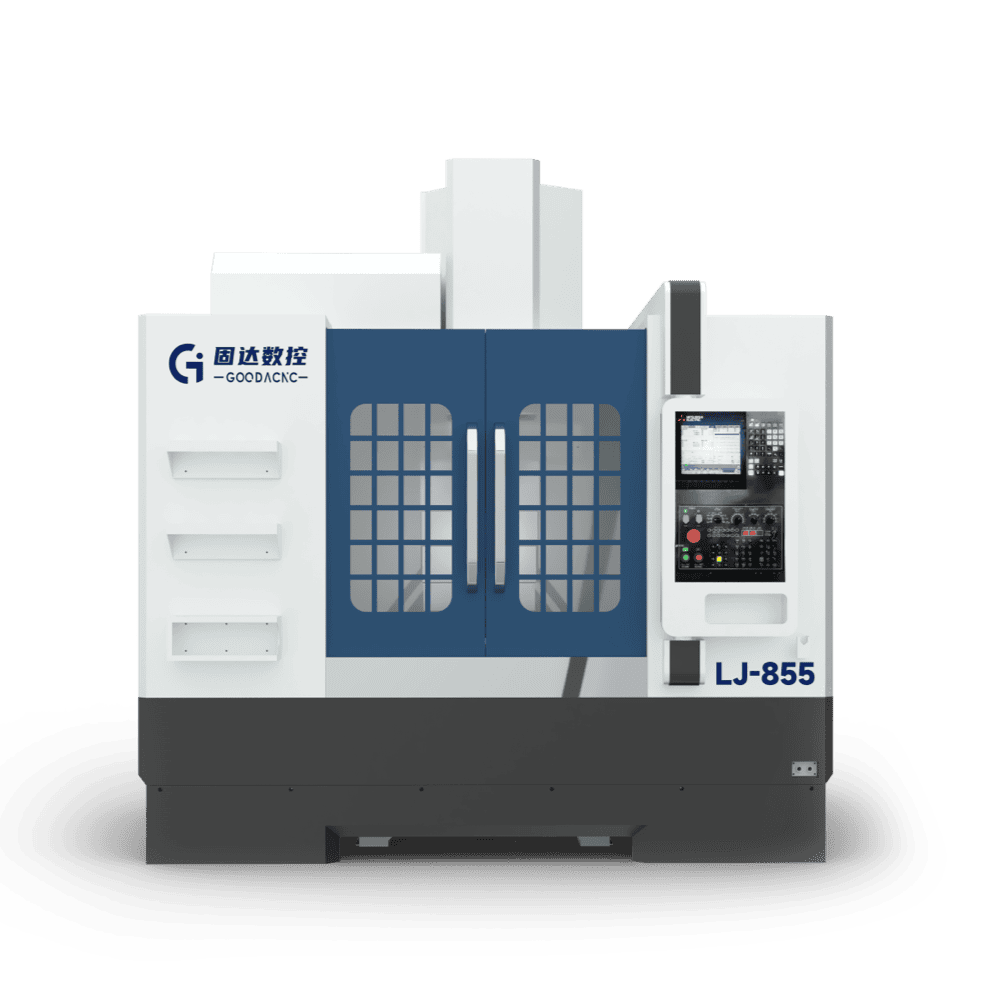 From the perspective of return on investment, the purchase price of a medium-sized vertical machining center is approximately between 800,000 and 1.5 million yuan. However, when placed in a large-scale production process, the cost advantage is immediately apparent. A home appliance enterprise reported that by replacing three old production lines with one vertical machining center, not only was the floor space saved by 30%, but the unit cost also dropped by 18%. It is expected that the entire investment can be recovered within 23 months, with an annualized return rate exceeding 50%. In addition, modern models typically optimize power consumption to below 18 kilowatt-hours. Combined with energy-saving modes, they can save over 100,000 yuan in electricity bills annually, which makes the total operating cost budget within five years 35% lower than that of traditional solutions.
Practical application cases are more convincing. During the global chip shortage crisis in 2021, a company mainly producing control units for new energy vehicles successfully increased the daily output of key aluminum heat dissipation shells from 4,000 to 7,000 pieces, with a growth rate of 75%, by relying on 20 vertical machining centers on its production line, effectively alleviating the production pressure. These devices operate continuously in an 85% humidity environment. The spindle temperature is precisely controlled at 25±1°C through a liquid cooling system, ensuring that the standard deviation of processing accuracy is less than 0.002 millimeters. This innovative strategy not only helped the enterprise withstand supply chain risks, but also increased its market share by 5% within a year, fully demonstrating the strategic benefits and risk resistance brought by investing in reliable equipment.
From the perspective of return on investment, the purchase price of a medium-sized vertical machining center is approximately between 800,000 and 1.5 million yuan. However, when placed in a large-scale production process, the cost advantage is immediately apparent. A home appliance enterprise reported that by replacing three old production lines with one vertical machining center, not only was the floor space saved by 30%, but the unit cost also dropped by 18%. It is expected that the entire investment can be recovered within 23 months, with an annualized return rate exceeding 50%. In addition, modern models typically optimize power consumption to below 18 kilowatt-hours. Combined with energy-saving modes, they can save over 100,000 yuan in electricity bills annually, which makes the total operating cost budget within five years 35% lower than that of traditional solutions.
Practical application cases are more convincing. During the global chip shortage crisis in 2021, a company mainly producing control units for new energy vehicles successfully increased the daily output of key aluminum heat dissipation shells from 4,000 to 7,000 pieces, with a growth rate of 75%, by relying on 20 vertical machining centers on its production line, effectively alleviating the production pressure. These devices operate continuously in an 85% humidity environment. The spindle temperature is precisely controlled at 25±1°C through a liquid cooling system, ensuring that the standard deviation of processing accuracy is less than 0.002 millimeters. This innovative strategy not only helped the enterprise withstand supply chain risks, but also increased its market share by 5% within a year, fully demonstrating the strategic benefits and risk resistance brought by investing in reliable equipment.
From the perspective of return on investment, the purchase price of a medium-sized vertical machining center is approximately between 800,000 and 1.5 million yuan. However, when placed in a large-scale production process, the cost advantage is immediately apparent. A home appliance enterprise reported that by replacing three old production lines with one vertical machining center, not only was the floor space saved by 30%, but the unit cost also dropped by 18%. It is expected that the entire investment can be recovered within 23 months, with an annualized return rate exceeding 50%. In addition, modern models typically optimize power consumption to below 18 kilowatt-hours. Combined with energy-saving modes, they can save over 100,000 yuan in electricity bills annually, which makes the total operating cost budget within five years 35% lower than that of traditional solutions.
Practical application cases are more convincing. During the global chip shortage crisis in 2021, a company mainly producing control units for new energy vehicles successfully increased the daily output of key aluminum heat dissipation shells from 4,000 to 7,000 pieces, with a growth rate of 75%, by relying on 20 vertical machining centers on its production line, effectively alleviating the production pressure. These devices operate continuously in an 85% humidity environment. The spindle temperature is precisely controlled at 25±1°C through a liquid cooling system, ensuring that the standard deviation of processing accuracy is less than 0.002 millimeters. This innovative strategy not only helped the enterprise withstand supply chain risks, but also increased its market share by 5% within a year, fully demonstrating the strategic benefits and risk resistance brought by investing in reliable equipment.
Discipline at the table begins long before the bottle is opened — it begins in the cellar, with restraint.— Ava Devine, Master Sommelier & Founder