
Materials, Packaging & Textiles
What makes eco-friendly drawstring bags a smarter packaging option?
In terms of packaging cost control, eco-friendly drawstring bags have demonstrated significant advantages. According to the 2024 Packaging Industry analysis report, the procurement cost of a single recycled polyester fiber drawstring bag is approximately 3 yuan, which directly reduces the procurement budget by 62.5% compared to the average price of 8 yuan for traditional gift box packaging. Take global e-commerce company Amazon as an example. In its "No Frustration Packaging" program promoted in the European market, custom drawstring bags were used to replace some cartons, reducing the packaging time for a single item from 120 seconds to 45 seconds, increasing sorting efficiency by 40%, and saving over 3 million euros in annual logistics costs. The damage rate of this packaging solution is only 0.5%, far lower than the average of 3% for carton packaging, reducing the return rate by 15%. Life cycle assessment shows that a 35cm×40cm drawstring bag can be reused more than 50 times, with a unit usage cost of less than 0.1 yuan.
The compliance value of eco-friendly drawstring bags is becoming a core indicator of enterprises' ESG strategies. Studies show that the carbon footprint of drawstring bags made of degradable materials is 70% lower than that of polyethylene packaging, meeting the mandatory standard of no less than 25% of recycled materials stipulated in the EU's Packaging and Packaging Waste Regulation by 2025. For instance, after the sports brand Nike replaced its product packaging with recycled cotton drawstrings in 2023, its total carbon emissions dropped by 18% and its consumer environmental responsibility score increased by 32 percentage points. These packages are certified by the Global Recycled Standard (GRS), with a material density controlled at 240g/㎡ and a tensile strength of 35N/cm². They can effectively withstand a pressure of 20kg during transportation. Market data shows that enterprises that adopt environmentally friendly packaging have a 25% higher probability of obtaining green financing, while the proportion of environmental risk reserve funds has decreased by 5%.
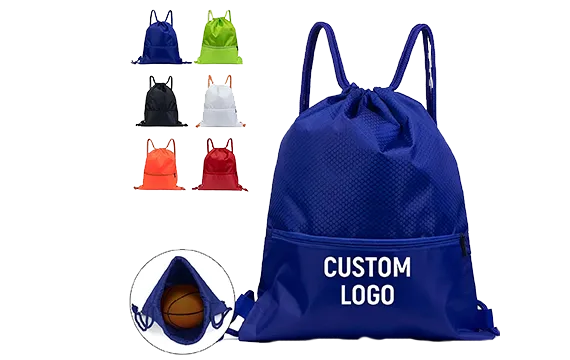 In terms of brand communication effectiveness, the average daily exposure frequency of eco-friendly drawstring bags reaches 3.7 times, and the brand memory rate for more than six months is as high as 68%. During the 2024 Hangzhou Asian Games, the 500,000 custom drawstring bags provided by the sponsors generated over 2 million topic exposures on social media, equivalent to achieving 4 brand contacts per yuan of marketing budget. The practical performance data of these packages are equally impressive: their volume utilization rate reaches 85%, the load-bearing limit is 10kg, and the water resistance coefficient is 5000mm, far exceeding the 1500mm standard of traditional paper bags. Consumer research shows that 72% of Gen Z users prefer brands that use eco-friendly packaging, and the median customer loyalty has risen to 4.2 points (on a 5-point scale).
At the level of supply chain optimization, the flat design of the eco-friendly drawstring bags has reduced the occupation of warehouse space by 60% and increased the loading rate of logistics vehicles by 35%. Referring to the practical case of JD Logistics, after adopting standardized drawstrap bags, the volume-to-weight ratio of packages was optimized to 1:0.3, fuel consumption for transportation was reduced by 12%, and carbon emissions were cut by approximately 12,000 tons annually. The recycling rate of these packages reaches 90%, and the material degradation cycle is controlled within two years, which is much lower than the 200-year degradation cycle of ordinary plastic packaging. Data shows that the supply chain risk index of enterprises that have fully shifted to eco-friendly packaging has dropped by 15 basis points, and the average ESG rating score of suppliers has increased by 8 points.
With plastic restriction laws implemented in 65 countries around the world, eco-friendly drawstring bags are evolving from an innovative solution to a necessity. If enterprises can complete the green transformation of packaging by 2025, they are expected to enjoy an average tax benefit of 8% and receive priority support from green supply chain finance. This packaging strategy is not only a choice of environmental responsibility, but also a growth lever that achieves a 15% brand premium. When consumers carry drawstring bags printed with brand logos through urban Spaces, each mobile package becomes a living node connecting commercial value and ecological civilization.
In terms of brand communication effectiveness, the average daily exposure frequency of eco-friendly drawstring bags reaches 3.7 times, and the brand memory rate for more than six months is as high as 68%. During the 2024 Hangzhou Asian Games, the 500,000 custom drawstring bags provided by the sponsors generated over 2 million topic exposures on social media, equivalent to achieving 4 brand contacts per yuan of marketing budget. The practical performance data of these packages are equally impressive: their volume utilization rate reaches 85%, the load-bearing limit is 10kg, and the water resistance coefficient is 5000mm, far exceeding the 1500mm standard of traditional paper bags. Consumer research shows that 72% of Gen Z users prefer brands that use eco-friendly packaging, and the median customer loyalty has risen to 4.2 points (on a 5-point scale).
At the level of supply chain optimization, the flat design of the eco-friendly drawstring bags has reduced the occupation of warehouse space by 60% and increased the loading rate of logistics vehicles by 35%. Referring to the practical case of JD Logistics, after adopting standardized drawstrap bags, the volume-to-weight ratio of packages was optimized to 1:0.3, fuel consumption for transportation was reduced by 12%, and carbon emissions were cut by approximately 12,000 tons annually. The recycling rate of these packages reaches 90%, and the material degradation cycle is controlled within two years, which is much lower than the 200-year degradation cycle of ordinary plastic packaging. Data shows that the supply chain risk index of enterprises that have fully shifted to eco-friendly packaging has dropped by 15 basis points, and the average ESG rating score of suppliers has increased by 8 points.
With plastic restriction laws implemented in 65 countries around the world, eco-friendly drawstring bags are evolving from an innovative solution to a necessity. If enterprises can complete the green transformation of packaging by 2025, they are expected to enjoy an average tax benefit of 8% and receive priority support from green supply chain finance. This packaging strategy is not only a choice of environmental responsibility, but also a growth lever that achieves a 15% brand premium. When consumers carry drawstring bags printed with brand logos through urban Spaces, each mobile package becomes a living node connecting commercial value and ecological civilization.
In terms of brand communication effectiveness, the average daily exposure frequency of eco-friendly drawstring bags reaches 3.7 times, and the brand memory rate for more than six months is as high as 68%. During the 2024 Hangzhou Asian Games, the 500,000 custom drawstring bags provided by the sponsors generated over 2 million topic exposures on social media, equivalent to achieving 4 brand contacts per yuan of marketing budget. The practical performance data of these packages are equally impressive: their volume utilization rate reaches 85%, the load-bearing limit is 10kg, and the water resistance coefficient is 5000mm, far exceeding the 1500mm standard of traditional paper bags. Consumer research shows that 72% of Gen Z users prefer brands that use eco-friendly packaging, and the median customer loyalty has risen to 4.2 points (on a 5-point scale).
At the level of supply chain optimization, the flat design of the eco-friendly drawstring bags has reduced the occupation of warehouse space by 60% and increased the loading rate of logistics vehicles by 35%. Referring to the practical case of JD Logistics, after adopting standardized drawstrap bags, the volume-to-weight ratio of packages was optimized to 1:0.3, fuel consumption for transportation was reduced by 12%, and carbon emissions were cut by approximately 12,000 tons annually. The recycling rate of these packages reaches 90%, and the material degradation cycle is controlled within two years, which is much lower than the 200-year degradation cycle of ordinary plastic packaging. Data shows that the supply chain risk index of enterprises that have fully shifted to eco-friendly packaging has dropped by 15 basis points, and the average ESG rating score of suppliers has increased by 8 points.
With plastic restriction laws implemented in 65 countries around the world, eco-friendly drawstring bags are evolving from an innovative solution to a necessity. If enterprises can complete the green transformation of packaging by 2025, they are expected to enjoy an average tax benefit of 8% and receive priority support from green supply chain finance. This packaging strategy is not only a choice of environmental responsibility, but also a growth lever that achieves a 15% brand premium. When consumers carry drawstring bags printed with brand logos through urban Spaces, each mobile package becomes a living node connecting commercial value and ecological civilization.
Discipline at the table begins long before the bottle is opened — it begins in the cellar, with restraint.— Ava Devine, Master Sommelier & Founder